At first glance, FAST still feels like a step backward. Linear channels, fixed programming, ads in between. Everything that streaming would ever ‘solve’ suddenly seems to be coming back. And yet this very model is growing faster than many on-demand propositions. This is neither a coincidence nor nostalgia but a reaction to how the market has evolved.
Streaming has brought choice, but also choice stress. The promise of unlimited on-demand content increasingly collides with the reality of stacking subscriptions, fragmentation and thus choice stress. In that context, free content, provided the ad burden is acceptable, feels logical. FAST is just that: free, linear and ad-driven, but delivered via Connected TV.
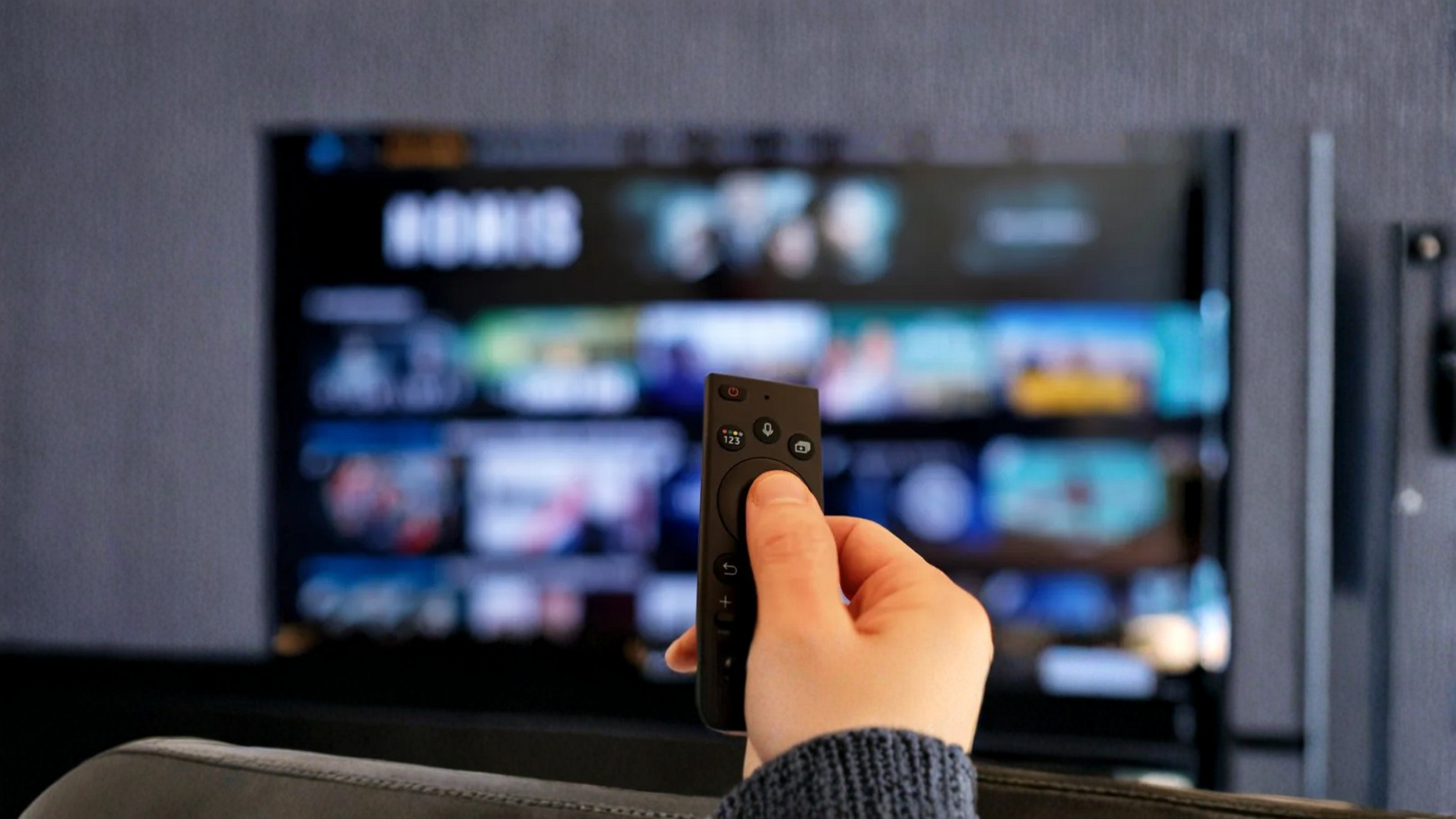
What sets FAST apart from previous ad-driven models is not the content form, but the distribution. This is not an app that viewers must actively seek out. FAST sits at the starting position of the screen. Anyone who turns on the TV and enters its menu will see the offerings.
The scale is already there
The growth of FAST is often underestimated because people look at individual channels or single publishers. But the scale does not arise there. It originates with the parties that own the hardware and operating system. An important player is Samsung TV Plus, which recently passed the 100 million monthly viewers mark, ten years after its international launch and five years after its introduction in the Netherlands. In doing so, Samsung reports a growth of more than 25% in streamed hours year-on-year [1]. FAST is growing here not through marketing, but through presence: it comes standard on the device. Many smart TV's now come with FAST services pre-installed, making access seamless and reducing the barrier to zero.
This is a fundamental difference from previous waves of streaming. Whereas SVOD was dependent on brand preference and active choice, FAST grows through standard consumer behavior. With that, FAST is shifting from "extra option" to a structural part of how consumers use television. Data from Nielsen underscores that movement: in the United States, FAST now represents 6.8% of total television use, up more than 400% from four years earlier [2].
Projections by Digital TV Research show global FAST advertising sales growing from about $8 billion in 2023 to $17 billion in 2029 [3]. Other analyses by Solomon Partners and Omdia outline similar growth curves, with projected annual growth of 23% through 2030 [4][5]. FAST is thus growing faster than the overall TV ad market and is riding on the broader shift toward Connected TV. This movement is also visible in the Netherlands: the VIA Digital Ad Spend Study shows that online video spending grew by 13%, mainly thanks to the advance of CTV [6].
In Europe too, FAST is emerging as a commercialële force. The European FAST market generated €630 million in revenue last year, a growth of 33%. Interestingly, Samsung TV Plus has now overtaken Pluto TV as the highest-earning FAST platform in Europe. Samsung and LG together accounted for 71% of additional revenue growth in the region, demonstrating that platform owners with hardware integration drive scale [7].
FAST in the Netherlands: from international players to local offerings
In the Netherlands too, FAST is emerging as a new player in the media landscape, although the market here is still at an earlier stage compared to the United States. The infrastructure is in place: 70% of Dutch televisions are now connected (read: connected to the Internet).
Samsung TV Plus currently represents the most prominent access to FAST in the Netherlands, available by default on Samsung Smart TV's. The platform offers more than 100 channels, ranging from international news channels to thematic film and series channels. Recently, Samsung added four Dutch FAST channels in partnership with Your Channels, including a 24/7 Voetbal International channel. Music platform XITE also launched two new channels through its platform in early 2025, aimed at Dutch viewers.
In addition to Samsung, Rakuten TV and LG Channels are active with free live channels on their respective smart TV ecosystems. Pluto TV, one of the best-known FAST services internationally, has not yet officially launched in the Netherlands although Paramount says it is exploring the market. When it does, dozens of additional channels will be added.
The offering is now still predominantly international, but local parties are experimenting. Talpa Media launched its own FAST channels around brands such as B&B Vol Liefde and Radio 538 exclusively on Samsung TV Plus. The company reported that their video inventory grew by 65-70% through this integration, indicating significant viewing time [8]. Through its partnership with Samsung, Talpa now reaches over 3 million unique viewers per month [9], making it one of the largest players in video reach in the Netherlands. Such movements indicate that Dutch media companies are taking FAST seriously as a distribution option.
Hard viewing figures are still limited, but indications point to growing interest. Younger target groups use FAST channels as background TV or to zap without a subscription. The combination of free content and the elimination of paywalls fits into a market where subscription stacking is meeting increasing resistance. Once the supply of Dutch-language content increases, further adoption will be obvious.
Why FAST works for advertisers (and why it still chafes)
For advertisers, FAST feels appealing for an old reason in a new jacket. It combines the power of television: big screen, attention and shared context with the flexibility of digital buying. As a result, FAST is used primarily as a supplement: extra reach on top of linear TV, toward target audiences that are increasingly hard to find there.
Research by Nielsen shows that FAST platforms in the U.S. are now structurally competing at the top of streaming viewing time, alongside major SVOD players [10]. At the same time, a majority of streaming viewers indicate that they are familiar with and actively use FAST services [11]. Free streaming with ads is thus widely accepted.
This acceptance translates into application opportunities. Broad reach campaigns find in FAST a logical extension of traditional television, especially for FMCG brands, car manufacturers and telecom providers seeking mass audiences. As such, the model delivers additional reach on top of linear TV. One feature is that the ads are shown full-screen on the television set (often with sound on) which is ideal for branding.
The big screen remains the crucial factor here. Research by Thinkbox shows that professional content, the company of others and the relaxed atmosphere contribute to the advertising impact of the big screen. That context provides higher attention value than mobile or desktop screens. In addition, Frequency capping allows for better control of repetition than is possible with traditional broadcast. Demographically, FAST also offers interesting opportunities. The FAST target audience is significantly younger than traditional linear television, which is predominantly viewed by people over 65 [12]. This makes FAST relevant for advertisers who want to reach young people without losing the scale of television.
At the same time, FAST's theme channel structure provides opportunities for contextual targeting. An outdoor brand can advertise around a nature documentary channel, a toy manufacturer around children's channels. Brands with defined target audiences can thus use FAST to position themselves in a highly targeted way without losing the scale of television.
For A-brands that value brand safety, FAST offers a safe alternative to platforms with user-generated content. Ads appear alongside professionally produced programs's and well-known series, with no risk of inappropriate context. This makes FAST suitable for campaigns where brand image is crucial: premium cars's, luxury products, government information. The relatively low ad load per hour reinforces this effect.
The effectiveness of FAST for brand building is now also becoming measurable. Research by Talpa Media and PepsiCo around a campaign for Pepsi Zero Sugar on FAST channels showed that positive brand perception increased by 8.5 percentage points, while brand associations such as "innovative", "trendy" and "premium" increased an average of 7.3 percentage points [13]. This confirms that FAST not only achieves reach but also reinforces brand equity in a premium CTV environment.
Though FAST is not yet an obvious premium channel. Supply is exploding, the market is becoming fragmented and measurability lags behind what advertisers are used to from digital platforms. Viewing data is largely platform-dependent, which makes measuring cross-platform reach and frequency complex [14]. Although FAST is digital and theoretically enables targeting through dynamic ad insertion, practice falls short of promise. Many platforms do not yet offer targeting at scale. For example, geo-targeting is not yet possible across all television brands.
But the biggest tension is deeper. In many FAST models, control lies not with the content party, but with the platform. That makes FAST simultaneously powerful and risky: the scale is large, but control is limited: a pattern that publishers recognize from previous waves of platforms. In addition, FAST suffers from execution problems that hurt the user experience. Repetition of the same ads, empty ad-breaks and curious unannounced ad-breaks are among the most frequently cited frustrations [15]. FAST is not compared by viewers to YouTube, but to television. That bar is set higher. When the ad experience does not live up to that expectation, the value for both viewer and advertiser erodes.
FAST requires direction, not volume
Just because FAST is linear, it does not work as residual inventory. A channel with no rhythm, no recognizable formula or no commercialële logic disappears into the noise. FAST is television. And television requires programming, even in a streaming context.
Analysis of global FAST offerings by Gracenote/Nielsen shows that the image of FAST as "old reruns-television" is outdated: more than 70% of the content on FAST channels is from after 2010 [16]. At the same time, it appears that channels with a clear genre or brand positioning achieve structurally higher viewing times than generic playlist channels.
For publishers, FAST thus offers an opportunity to monetize archival content again, but with focus. Old series, films or programs's can be given a second life on thematic channels, provided those channels have a clear proposition. Large media groups are capitalizing on this: FIFA launched FIFA+ as its own free channel, other parties are following with branded FAST channels. This is not about dumping content, but about creating new distribution streams with commercial discipline.
Commercially, the same is true. Those who sell FAST exclusively via open programmatic inevitably end up in bulk TV. Value is only created when scarcity is organized: through context, sponsorships clear pricing and a controlled ad load.
This includes a mature ad experience. Repetition, empty ad breaks and poor ad cueing are technically solvable, but require investment in ad server technology, dynamic ad insertion and quality control. Publishers who are serious about FAST must invest in these or accept that their channel will be seen as low-value inventory.
What FAST reveals at its core
FAST is not a trend that "adds" comes with it. It exposes a fundamental movement: ad-driven streaming is normalizing, while the infrastructure is entirely digital. The promise of free content is back, but the rules of the game have changed.
The rapid scale-up of platforms like Samsung TV Plus shows that FAST is not waiting for perfect standardization or ideal measurement models. Distribution is ahead and the market is following. That makes this moment strategically relevant for publishers, advertisers and media agencies.
So the question is not whether FAST stays. The question is who organizes the value as it grows. Will FAST be an additional layer of distribution in which reach leaks away to platforms, or a controlled CTV proposition in which quality, data and pricing discipline come together?
The answer to that will determine whether FAST ends up as bulk video or a structural, valuable part of the video market.
In the meantime, we at Media House are not sitting still and are working hard to launch even more FAST channels. Still this year, we hope to add 3 themed channels to our portfolio.
Sources
- Emerce – Streaming service Samsung reaches 100 million viewers https://www.emerce.nl/nieuws/streamingdienst-samsung-100-miljoen-kijkers
- The Measure – Measuring FAST: Nielsen puts share of viewing at 6.8% https://www.themeasure.net/measuring-fast-nielsen-puts-share-of-viewing-at-6-8/
- Digital TV Research – FAST market forecast 2023–2029 https://digitaltvresearch.com/products/fast-forecasts
- Solomon Partners – Free Ad-Supported Streaming TV grows as consumers cut the cord https://solomonpartners.com/2025/07/24/free-ad-supported-streaming-tv-fast-grows-as-consumers-cut-the-cord/
- Omdia – The rise of FAST services https://omdia.tech.informa.com/insights/2023/the-rise-of-fast-services
- VIA Netherlands – Digital Ad Spend Study https://vianederland.nl
- CSI Magazine – Samsung TV Plus becomes Europe’s top-grossing FAST platform https://www.csimagazine.com/csi/samsung-fast-europe.php
- Talpa Media – The rise of FAST channels https://www.talpamedia.nl/nieuws/achtergrondartikelen/artikelen/de-opkomst-van-fast-kanalen-meer-kijkplezier-meer-impact
- Talpa Media – Building an open video network https://www.talpamedia.nl/nieuws/achtergrondartikelen/artikelen/bouwen-aan-een-open-videonetwerk-talpa-medias-kijk-op-het-grote-scherm
- Nielsen – The Gauge: Streaming TV usage https://www.nielsen.com/insights/2023/the-gauge/
- Nielsen – Streaming consumers and FAST adoption https://www.nielsen.com/insights/2023/fast-streaming-awareness-study/
- Thinkbox – The power of the big screen https://www.thinkbox.tv/research/reports/tv-is-at-the-heart-of-effectiveness-whitepaper-by-peter-field
- MarketingTribune – Research PepsiCo confirms brand impact through FAST channels https://www.marketingtribune.nl/media/nieuws/2025/10/onderzoek-pepsico-bevestigt-merkimpact-via-fast-kanalen-talpa/
- AdExchanger – Why FAST measurement is still messy https://www.adexchanger.com/tv/why-fast-measurement-is-still-messy/
- Variety – FAST services struggle with ad repetition and fill https://variety.com/2023/digital/news/fast-tv-ad-repetition-issues-1235750321/
- Gracenote (Nielsen) – FAST content supply report https://www.nielsen.com/insights/2024/fast-content-supply-growth/